What LEED v5 Means for Architects and Project Teams
LEED v5 is the newest version of the LEED green building certification program from the U.S. Green Building Council (USGBC). The update reflects a growing industry focus on carbon reduction, resilience, and healthier buildings.
The building industry is responsible for approximately 40% of global emissions. LEED v5 responds to this challenge by placing greater emphasis on decarbonization, Quality of Life, and Ecological Conservation. For architects and project teams, one of the biggest changes is timing. LEED v5 moves more sustainability decisions earlier in the design process, when teams still have more flexibility to shape performance, cost, and certification strategy.
In this blog, we’ll cover what LEED v5 is, what changed, and what architects and project teams should plan for.
What is LEED v5?
LEED v5 is the latest version of the LEED green building certification program. Projects must first be registered on the USGBC LEED website under the LEED v5 rating system, then they must meet mandatory prerequisites, earn points through credits, and complete a third-party review by GBCI.
Certification levels remain the same:
- Certified: 40–49 points
- Silver: 50–59 points
- Gold: 60–79 points
- Platinum: 80+ points
LEED v5 currently applies to:
- Building Design + Construction (BD+C)
- Interior Design + Construction (ID+C)
- Operations + Maintenance (O+M)
The Three Main Impact Areas in LEED v5
LEED v5 groups its goals into three main impact areas. These areas shape how projects earn points and set priorities.
Decarbonization
This area focuses on lowering emissions tied to the building and how it operates, including:
- Building energy use
- Construction materials
- Refrigerants
- Transportation
A significant portion of LEED v5 points focus on decarbonization.
Quality of Life
This area focuses on how buildings support people and communities, including:
- Indoor environmental quality
- Occupant comfort and health
- Accessibility and equity
- Resilience
Ecological Conservation and Restoration
This area focuses on reducing harm to the natural environment. It supports strategies such as:
- Responsible site development
- Landscape planning
- Habitat protection
- Ecosystem support
What Changed From LEED v4
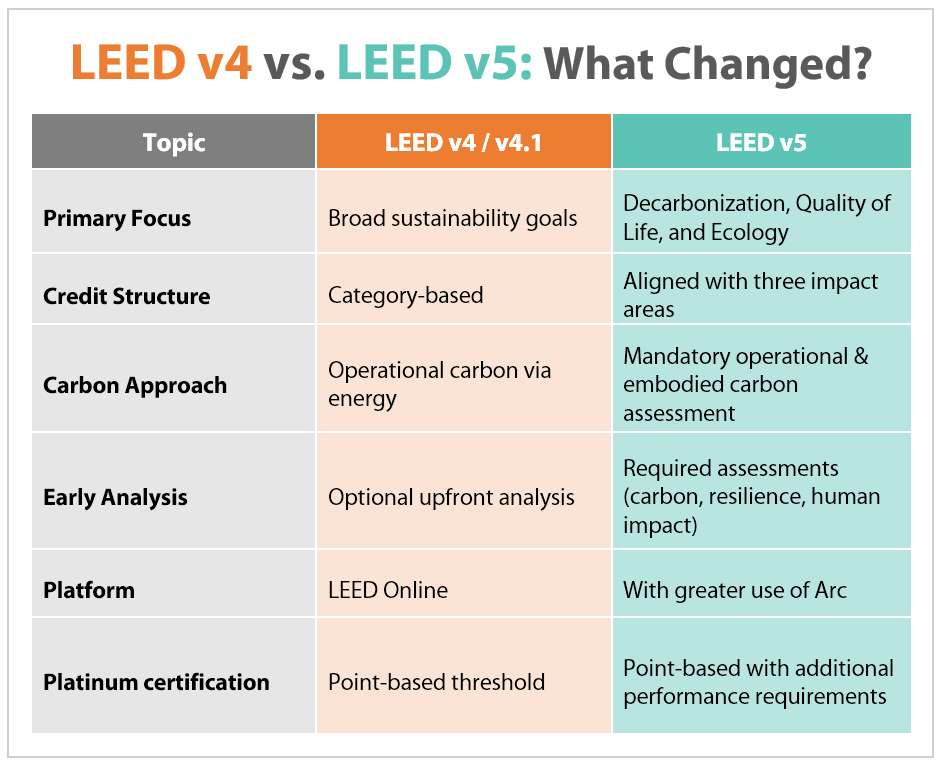
LEED v5 keeps the familiar certification levels but updates the credit structure and priorities, putting more focus on carbon reduction, resilience, and early design planning. Some prerequisites, documentation, and top-tier requirements are organized differently, making early planning even more important. Project teams now need to pay attention to carbon goals, assessments, and certification targets earlier in the design process. Early coordination between architects, owners, and MEP engineers can help avoid rework and make certification smoother.
The table below highlights the biggest changes architects and project teams should know. For a more detailed breakdown, see USGBC’s summary of changes from LEED v4 to LEED v5.
What Project Teams Should Do Early
Architects and project teams deciding between LEED v4.1 and LEED v5 should understand the timeline. LEED v4/v4.1 registration closes June 30, 2026, with a certification sunset of June 30, 2032.
For many teams, that means evaluating LEED v5 early. Projects that start after the registration deadline will typically pursue LEED v5. Early planning can help avoid redesign later in the project.
Projects pursuing LEED v5 benefit from a clear plan from the start. Key steps include:
- Choose the appropriate LEED rating system: Determine whether the project falls under BD+C, ID+C, or O+M.
- Set a realistic certification target: Identify whether the project aims for Certified, Silver, Gold, or Platinum.
- Complete required early assessments: LEED v5 encourages early assessments for carbon, climate resilience, and human impact.
- Align architecture and engineering strategies with carbon goals: Early decisions about building systems, envelope performance, and materials affect carbon outcomes.
- Establish a documentation workflow in Arc: Assign roles and responsibilities early so certification documentation stays organized.
Starting these steps early helps project teams reduce late changes and keep the certification process more manageable.
Conclusion
LEED v5 reflects how sustainability priorities are changing across the building industry, placing greater emphasis on carbon reduction, resilience, and occupant well-being.
For architects and project teams, the message is clear. Sustainability strategy now starts earlier in the design process. Projects that align architecture, engineering systems, and performance goals from the beginning will have a smoother path to certification.
If your team is planning a LEED project, early coordination can make the process far more efficient. Our LEED professionals work closely with architects and project teams to align building systems, energy strategies, and certification goals from the start of design.
Contact us to discuss your project and see how we can support your LEED v5 strategy from early planning through documentation.
Comments